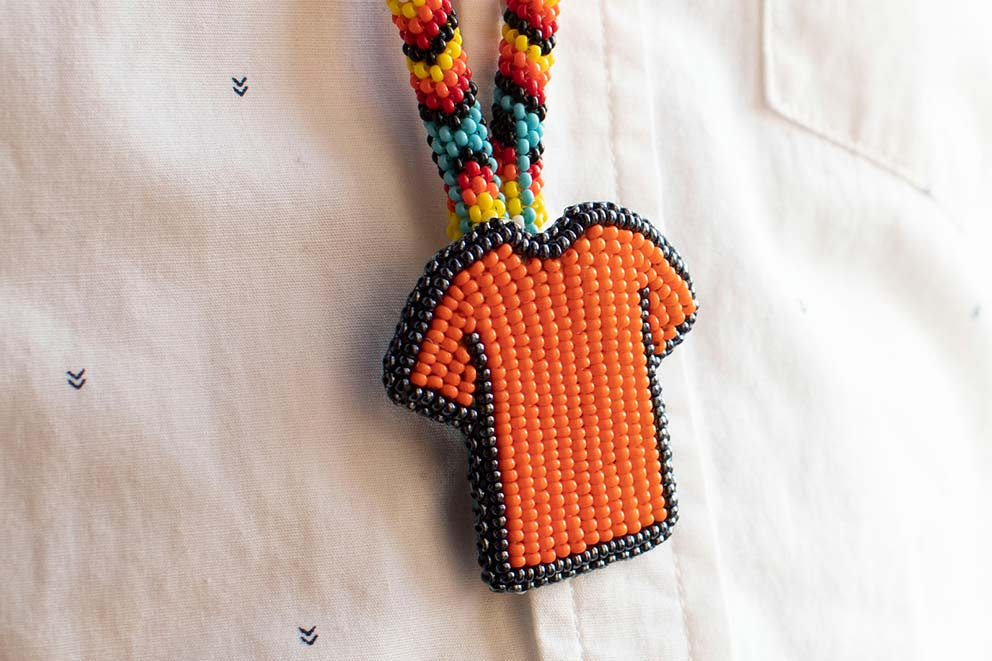

September 30 is the National Day for Truth and Reconciliation and Orange Shirt Day. It is a day to honour the children who never returned home from residential schools, Survivors, their families, and their communities.
For those of us who work in early learning and child care, it is also a day to reflect on what reconciliation means for the way Canada cares for and educates children today.
For generations, colonial policies deliberately separated Indigenous children from their families, communities, cultures, and languages. The residential school system was a central part of this history, and its effects continue to be felt by First Nations, Inuit, and Métis families and communities.
Reconciliation therefore connects directly to how we think about child care.
Indigenous Early Learning and Child Care Is About More Than Access
All families need access to high-quality child care. But for Indigenous children and families, quality must also include culture, language, identity, community, and self-determination.
The Truth and Reconciliation Commission recognized this connection. Call to Action 12 calls upon governments to develop culturally appropriate early childhood education programs for Indigenous families.
This means Indigenous early learning and child care cannot simply adapt programs designed elsewhere. Indigenous communities must lead and shape the programs that serve their children and families.
Culturally grounded early learning can create opportunities for children to learn their languages, participate in cultural practices, build relationships with Elders and Knowledge Keepers, and develop a strong sense of identity and belonging.
These are not additions to quality child care. They are part of what quality means.
Indigenous-Led Child Care Must Be Part of Canada’s Expansion
Canada is currently undertaking a major expansion of early learning and child care. As governments work to increase affordable child care spaces, Indigenous early learning and child care must be an integral part of that growth.
The Indigenous Early Learning and Child Care Framework, developed jointly by the Government of Canada and Indigenous Peoples, recognizes that First Nations, Inuit, and Métis children and families have distinct priorities, cultures, histories, and needs.
The framework identifies principles including Indigenous knowledge, cultures, and languages; self-determination; quality programs and services; child- and family-centred approaches; and flexible, adaptable programming.
Those principles matter when we talk about expanding child care.
Simply counting the number of new spaces created does not tell us whether Indigenous families can access care that reflects their communities or whether Indigenous communities have the resources and authority needed to develop the programs their families need.
Supporting Indigenous Children Means Supporting Indigenous Communities
Child care is deeply connected to community.
Strong Indigenous early learning and child care can support children while also strengthening connections among generations, families, languages, and cultures. Programs can provide spaces where children see their identities reflected and where Indigenous knowledge and ways of learning are valued.
This also means supporting the people who provide that care.
A sustainable Indigenous early learning and child care system requires investment in Indigenous educators, fair compensation, training and professional development, infrastructure, and the long-term resources communities need to operate and expand programs.
It also requires recognizing that the needs of First Nations, Inuit, and Métis communities are not identical. Programs developed for urban Indigenous families may look different from those in rural, remote, northern, or on-reserve communities. A system committed to reconciliation must be flexible enough to respond to those differences.
Every Child Matters in the Child Care System We Build
Orange Shirt Day reminds us that Every Child Matters.
In early learning and child care, those words should also shape how we think about the future.
Every Indigenous child should be able to grow up knowing that their language matters. Their culture matters. Their family and community matter. Their identity matters.
As Canada continues to expand its early learning and child care system, reconciliation requires more than acknowledging past harms. It requires thinking carefully about the systems we are building today.
That means listening to Indigenous communities, supporting Indigenous leadership and self-determination, investing in culturally grounded early learning and child care, and ensuring that Indigenous children and families are not an afterthought in child care expansion.
On September 30, we remember the children who never returned home, honour Survivors and their families, and reflect on the work that remains.
For those of us working in child care, part of that work is helping to build a future in which Indigenous children can learn and grow surrounded by their families, communities, cultures, and languages.
Because every child matters.